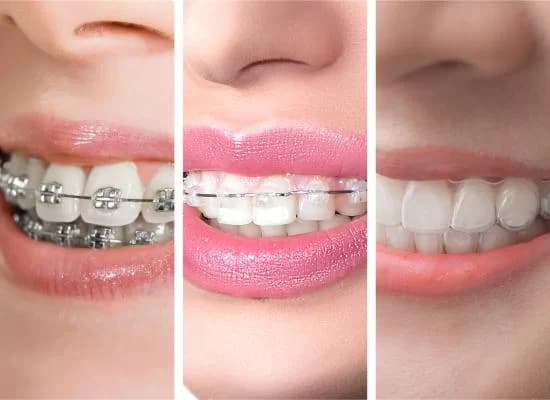
What is it?
Invisible aligners (including Invisalign and custom clear aligner systems) are computer-designed series of transparent, removable aligners that straighten crooked, crowded, or gapped teeth without noticeable metal braces. At Kumar's Microscopic Dental Care in Yelahanka, digital scanning and orthodontic smile alignment are planned with precision.
Who needs it?
- Adults and teens wanting discreet, unnoticeable teeth straightening
- Mild to severe teeth crowding, overlapping, or gaps between teeth
- Patients wanting freedom to eat whatever they like and brush easily
- Professionals and working adults seeking aesthetic orthodontic alignment
Symptoms
- Crowded or overlapping front teeth
- Gaps and spaces between teeth
- Mild overbite, underbite, or crossbite concerns
- Relapse after previous teenage metal braces
Causes
- Genetic jaw-to-tooth size mismatch
- Premature loss of baby teeth leading to drifting
- Tongue thrusting or thumb-sucking habits in childhood
- Not wearing retainers after earlier orthodontic treatment
Benefits
- Virtually invisible when worn—no metal brackets or wires
- 100% removable for meals, brushing, and special occasions
- No food restrictions or wire pokes
- Predictable 3D digital simulation showing final smile before starting
Risks & considerations
- Requires discipline to wear for 20–22 hours daily
- Temporary mild lisp for the first 2–3 days
- Must wear retainers after treatment to prevent teeth drifting back
Treatment process
- Comprehensive orthodontic assessment & 3D intraoral digital optical scan
- 3D digital treatment plan (ClinCheck simulation) showing week-by-week tooth movement
- Custom medical-grade aligner trays delivered with fitting instructions
- Switch to a new set of aligner trays every 1–2 weeks
- Progress checks every 6–8 weeks, followed by clear retainers
Recovery
Mild tightness for 24–48 hours when switching to a new tray is normal. No tissue injuries or dietary recovery needed.
Duration
Typically 6–18 months depending on case complexity; mild spacing cases can take as little as 4–6 months.
Cost (Bangalore indicative)
₹60,000 – ₹2,50,000+ based on case complexity, brand choice (Invisalign vs custom lab systems), and duration. Indicative Bangalore ranges; confirm at consultation.
Indicative Bangalore ranges for planning only. Final fees confirmed after clinical examination.
Success & outcomes
Over 96% patient satisfaction and success rate when worn consistently for 22 hours per day.
Frequently asked questions
How much does Invisalign and clear aligners cost in Bangalore?
Clear aligner treatment in Bangalore generally costs between ₹60,000 and ₹2,50,000 depending on the degree of misalignment, treatment duration, and whether you choose international brands like Invisalign or advanced domestic aligner systems. Flexible monthly EMI plans are available.
Are clear aligners as effective as traditional metal braces?
Yes, for the vast majority of mild, moderate, and orthodontic misalignment cases, clear aligners achieve identical or superior results with greater comfort and aesthetics. Extreme skeletal bite corrections may be assessed for ceramic or metal braces.
How many hours a day must I wear invisible aligners?
Aligners should be worn for 20 to 22 hours every day, taking them out only when eating, drinking anything other than water, and brushing/flossing.
Can teenagers and working professionals use clear aligners?
Yes. Clear aligners are exceptionally popular with working professionals, college students, and teenagers because they are completely transparent and fit seamlessly into social and corporate life.
Related treatments
Medically reviewed by Dr. RV Roshini, MDS (Prosthodontics & Implantology). Last updated 2026-08-30. Educational references include publicly available guidance from organisations such as the Indian Dental Association (IDA) and American Dental Association (ADA) patient education materials—adapted for general understanding, not as case-specific advice.