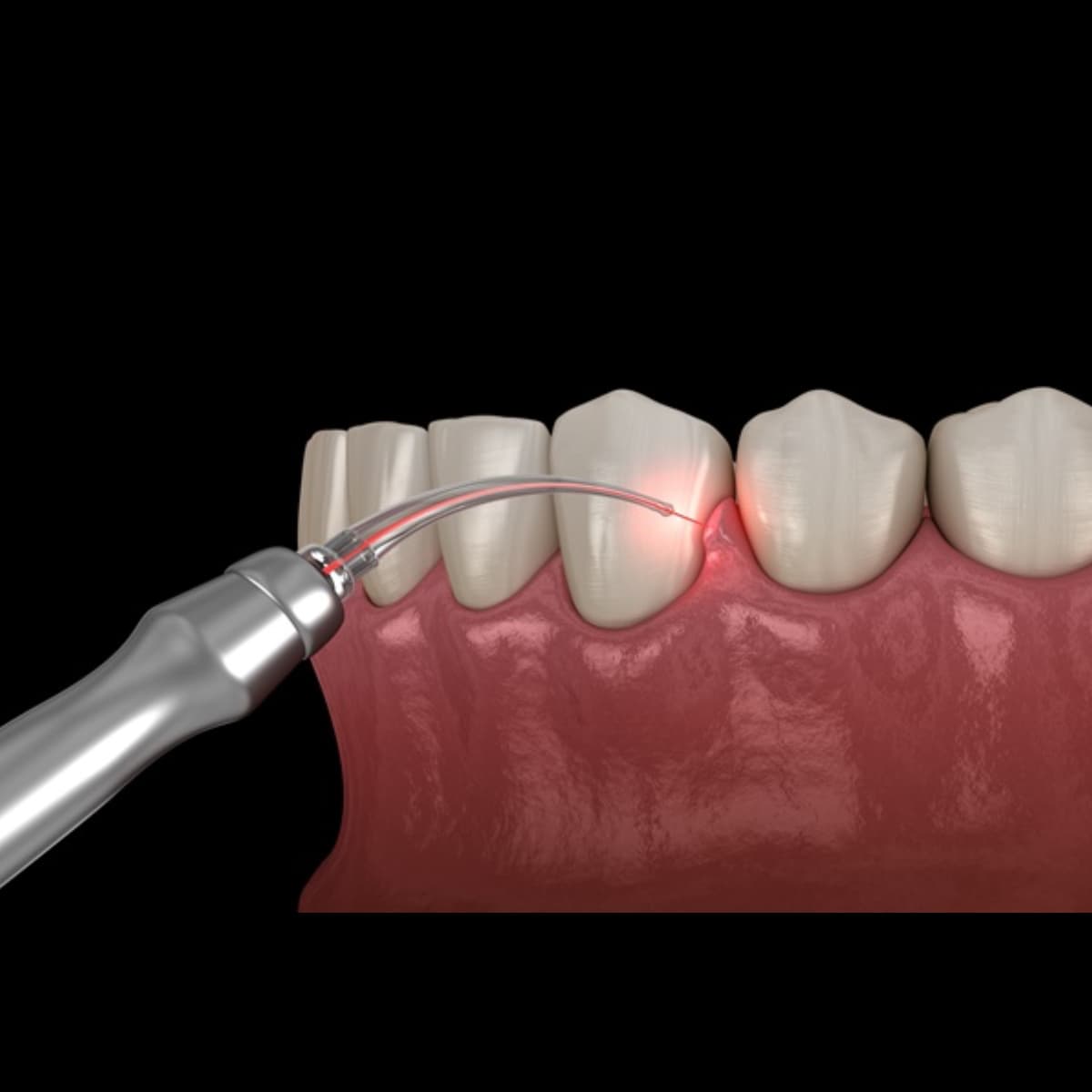
What is it?
Laser dentistry uses focused light energy for certain soft-tissue procedures such as gingival contouring or assisting in managing inflamed tissues. It complements—not replaces—standard drilling and surgical methods when clinically indicated.
Who needs it?
- Patients needing minor soft-tissue recontouring
- Select cases of gum inflammation adjunct care
- Those for whom the clinician judges laser appropriate
Symptoms
- Uneven gum display
- Localised soft-tissue irritation
- Need for precise soft-tissue modification before restorative work
Causes
- Altered passive eruption aesthetics
- Inflammatory gingival conditions
- Restorative margins needing clearer access
Benefits
- Often reduced bleeding in soft-tissue work
- Precision in selected indications
- May reduce suture need in minor procedures
Risks & considerations
- Not suitable for every hard-tissue task
- Thermal risk if protocols ignored (clinician-controlled)
- Standard post-op care still required
Treatment process
- Diagnosis and indication check
- Protective measures and consent
- Laser application with settings matched to tissue
- Post-op hygiene advice
Recovery
Mild tenderness possible. Avoid spicy foods briefly if soft tissue treated. Follow rinses as prescribed.
Duration
Many soft-tissue laser adjuncts add 10–30 minutes to a visit.
Cost (Bangalore indicative)
₹2,000 – ₹15,000+ depending on procedure scope. Indicative Bangalore ranges; confirm at consultation.
Indicative Bangalore ranges for planning only. Final fees confirmed after clinical examination.
Success & outcomes
Success depends on correct case selection. Lasers are tools—not magic substitutes for good diagnosis.
Frequently asked questions
Does laser mean painless dentistry always?
It can improve comfort in some soft-tissue procedures, but anaesthesia is still used when needed. Hard-tissue dentistry often still needs conventional methods.
Related treatments
Medically reviewed by Dr. Prem Kumar R, MDS (Pediatric & Preventive Dentistry). Last updated 2026-07-01. Educational references include publicly available guidance from organisations such as the Indian Dental Association (IDA) and American Dental Association (ADA) patient education materials—adapted for general understanding, not as case-specific advice.